Create safety
People should be able to tell me they're stretched before it becomes a problem. When findings are hard to hear, about a market, a product or a plan, I deliver them myself, so the team can stay focused on the work.
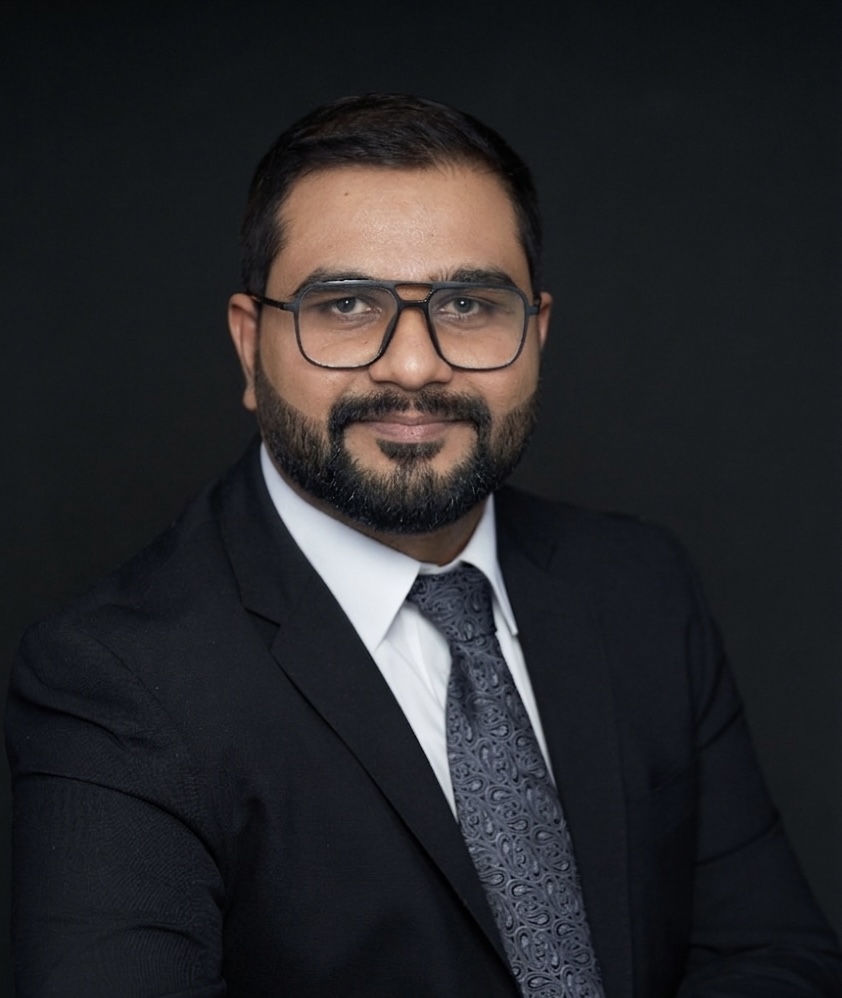
I'm Manwendra. In high-assurance, enterprise markets, such as banking, insurance, the public sector and defence, where a wrong decision carries regulatory, financial or public consequences, technology only sells once it's trusted. Trust is earned with evidence, not claims, and I build the go-to-market that earns it. Over 11+ years, I've been brought in four times to do this, at Mozn, Radware, Cardstack and Merkle Science, always alongside teams I'm proud of.
“Entrepreneurial, an innovative thinker, and has a strong bias to action… I would highly recommend Manwendra for a leadership role in marketing.”
“Instrumental in building a high-performing team, cultivating a strong culture, and instilling a commendable work ethic.”
“His adeptness at leading a geographically dispersed team delivered measurable results for Cardstack.”
People do their best work when they feel safe, are trusted with something that matters, and know someone has their back.
Ambition and calm go together. I'm clear about what we're aiming for and why it matters. My job is to carry the pressure that comes with it, keep the room steady, and make sure my team's work is recognised and rewarded.
AI has made output cheap: a draft, a deck or an analysis now takes seconds. Knowing whether it's right still takes judgement, and in high-assurance markets like banking and the public sector, that judgement is the job. So on my teams, everyone is responsible for what they deliver, however it was produced.
For example, most recently at Mozn, we built AI agents into the team's daily workflows. They helped us move faster, while each person remained accountable for the quality and accuracy of their own work. That only works when people feel safe saying an output isn't good enough, which is where my first principle comes in.
People should be able to tell me they're stretched before it becomes a problem. When findings are hard to hear, about a market, a product or a plan, I deliver them myself, so the team can stay focused on the work.
In regulated technology, experience is a strategy. I hire people who are ambitious, get things done and let the work speak, then give them direction and trust their judgement. For example, most recently at Mozn, I brought experienced senior marketers from across the industry into hands-on roles, and their market knowledge shaped our brand.
I give people with potential ownership of something that matters, work alongside them at first, then step back, and I make sure their work is seen and rewarded. For example, most recently at Mozn, two senior product marketers on my team have since been promoted to lead roles.
When I disagree with a CEO, CMO or sales leader, I first make sure I understand their view, then come back with structured reasoning. If I don't have the answer yet, I say so. For example, when a proposed restructuring would have stretched specialists across very different regulatory domains, a structured case led to a middle ground that worked for everyone.
I judge my leadership by one test: whether people outgrow the roles I hired them for. Hiring experienced people taught me the rest. Leading well means setting direction, giving cover and trusting people to deliver, not owning everything myself.
Regulated buyers trust peers and evidence more than vendor claims. So I earn trust first and turn it into revenue second.
Buyers now meet vendors through AI before they meet them in person. At the same time, every vendor claims AI: Gartner estimates only about 130 of the thousands selling "agentic AI" are genuine. For a bank or a government, that means more claims and less certainty. The vendors who win are the ones whose evidence holds up when the buyer, or the buyer's AI, checks.
Lead with something useful: original research, a peer forum, a readiness assessment. It reveals the buyer's real problem and creates the evidence that buyers and their AI tools will find.
For example, at Radware, bot-threat research cited by BBC and TechRadar made the company a go-to voice on bot fraud. At Merkle Science, RegWatch regulatory intelligence became the primary growth engine.
Shape positioning, packaging and pricing around what buyers reveal, so the product reads as the answer to their problem, not another AI claim.
For example, most recently at Mozn, a readiness assessment for new counter-fraud rules became a new revenue line.
Independent validation is what separates real capability from agent-washing, so analyst relations and peer advocacy are core to go-to-market.
For example, at Radware, Forrester made intent-based behaviour analysis a requirement in its Wave and named Bot Manager a Leader. Most recently at Mozn, the team earned Chartis AML & KYC Leader status and 25 analyst recognitions in 2026 so far.
Run one operating model across sales, marketing, product and pre-sales, back it with strong enablement, and use AI to make the team faster without lowering the bar on accuracy.
For example, most recently at Mozn, that engine supported 2.5× ARR growth in a single year.
The playbook has worked in cybersecurity, crypto compliance, financial crime and enterprise AI. Technology keeps changing. The buyer's need for evidence doesn't, and AI has only raised the bar.
How automated bots exploited public fear during the COVID-19 infodemic, from amplifying misinformation to enabling fraud.
How sophisticated bots mimic human behaviour to evade detection and commit online fraud, and what that means for detection strategy.
Read on Radware →Engineering research proposing a bio-inspired queen bee algorithm for designing communication networks between robots.
Read the paper →Radware, Merkle Science, Cardstack and Mozn each brought me in when their technology was ahead of its market. Each time, the job was the same: earn the market's trust, then build the engine that turns it into revenue. Here is what that involved, across strategy, marketing, sales and the teams behind them.
An enterprise AI company backed by HUMAIN (PIF), serving 150+ banks, fintechs and public-sector institutions across two lines: enterprise AI (mozn.ai) and financial crime prevention (FOCAL). I joined as the first Head of Product Marketing. I work as a strategic partner to the commercial and executive leadership.
A blockchain infrastructure company that needed to move from a community-led audience to institutional buyers in the US, then hold its ground through a regulatory event.
A new developer platform for the US market, built by a team spread across the US, Southeast Asia and Europe, with no product marketing function in place.
A crypto compliance platform selling to exchanges and financial institutions, in a market regulators were still defining. I was the first GTM hire.
A public cybersecurity company with a new Bot Manager business and no dedicated product marketing behind it, in a category buyers barely understood. I also led GTM for API Security.
Earlier: Content Marketer at Moxo (B2B SaaS for financial services) and Assistant Editor at CIO Review, writing for technology leaders in the US and Canada.
I trained as an electronics and communication engineer, and my first job was as an editor, writing about technology for CIOs. Go-to-market turned out to be where both halves meet: taking something deeply technical and making it the answer to someone's real problem.
Delivered jointly with HKUST Business School in Hong Kong, including Doing Business in China, and the University of Cape Town.
Preceded by a three-year diploma in the same field. Published research on communication networks for robotics.
A French state-registered programme, built on the experience of former military officers, on decision-making and coordination under pressure.
The best way to see a town, I think, is on foot or by bike. Going slowly gives you time to notice things, and that's where the memories come from. Skiing is the opposite: the exhilarating part of an otherwise slow winter. My favourite so far is the mountains around Almaty, Kazakhstan.
Home today is Brno, in the Czech Republic.
Go-to-market for regulated buyers, building marketing teams, analyst relations, or a good ski run: any of these is a good reason to get in touch.
Problems where trust decides the outcome, at companies where we can build and scale something together.
manwendra.mishra01@gmail.com · Brno, Czech Republic (CET)